The Moments Between
What George Washington’s Life Still Teaches Us 250 Years Later

An Essay to Honor the Nation’s 250th Anniversary and to show my gratitude for all those who have laid their lives down in sacrifice in various ways to secure my life, liberty, and the pursuit of happiness…I honor you.
The Moments Between
History remembers defining moments, but God often works through ordinary ones.
When we celebrate America’s independence, our minds naturally travel to the milestones that forever changed the course of our nation’s history. We remember the signing of the Declaration of Independence. We picture General George Washington crossing the icy Delaware River on Christmas night. We recall the bitter winter at Valley Forge, the triumph at Yorktown, and the unanimous election of our nation’s first President.
History rightly remembers those moments because they altered the course of a nation.
As I have learned about the life of George Washington through the years, I found myself continually returning to a question that history books seldom ask. What happened in the years no one celebrates? What was taking place within the heart of the young surveyor long before he became Commander in Chief? What quiet work was God accomplishing in the grieving younger brother before he became the Father of His Country?
What unseen moments shaped the character of the man history would eventually remember? The more I reflected upon Washington’s life, the more convinced I became that his greatest lessons are not found only in history’s celebrated milestones. They are found in the ordinary years between them.
Those quiet years—marked by disappointment, perseverance, humility, responsibility, conviction, and faithful stewardship—formed the character of the man who would later help shape a nation. That seems to still be God’s pattern today. Throughout Scripture we see that God delights in preparing people long before He reveals His purposes.
Moses spent forty years tending sheep before leading Israel out of Egypt.
Joseph endured betrayal, slavery, and prison before saving nations.
David faithfully watched over sheep before wearing Israel’s crown.
Esther’s courage was cultivated long before she entered the king’s palace.
The Apostle Paul spent years growing in obscurity before beginning the missionary journeys for which he is remembered.
God has never been in a hurry. He is far more interested in forming character than creating prominence. History often celebrates the public victory. God quietly prepares the person.
Perhaps that is why Galatians 6:9 has remained one of my life’s guiding Scriptures.
“Let us not grow weary in doing good, for in due season we will reap a harvest, if we do not give up.”
Harvest rarely appears immediately after planting. There are seasons of waiting. Seasons of uncertainty. Seasons when very little seems to be happening at all. Yet those seasons are not interruptions to God’s work. They are His work. As our nation commemorates the 250th anniversary of American independence, George Washington’s life reminds us that history is seldom written in a single dramatic moment.
More often…it is written one faithful day at a time. It is written in the moments between.
The Quiet Formation of Character
George Washington entered this world on February 22, 1732, at Pope’s Creek in Virginia’s Northern Neck. Nothing about his childhood suggested he would one day command an army, preside over a Constitutional Convention, or become the first President of the United States. Like so many lives that eventually influence history, his began quite ordinarily. Yet ordinary does not mean insignificant. When George was only eleven years old, his father, Augustine Washington, died unexpectedly. The loss forever altered the course of his young life. Financial circumstances changed, and the formal education in England enjoyed by many young Virginia gentlemen was no longer possible for George.
To many, this would have appeared to be a devastating disappointment. History would eventually reveal something different. God was preparing Washington through a different classroom. Rather than lecture halls…he would learn through responsibility.
Rather than an abundance of financial privilege, he would learn through perseverance.
Rather than comfort, he would learn through experience and pain.
Looking back, I cannot help but wonder whether what appeared to be a closed door became one of God’s earliest preparations for the responsibilities that awaited him. How many times have we mourned opportunities we believed we had lost only to discover years later that God had quietly redirected our steps toward something greater? Perhaps Washington’s story reminds us that just because prayers are not answered in the way we hope does not mean God is absent. Sometimes they are evidence of His wisdom and faithful watch care.
A Brother’s Investment
One of the greatest gifts God gave young George Washington was his older half-brother, Lawrence.
History remembers George, but George never forgot Lawrence.
Lawrence became much more than an older brother. He became a mentor. A trusted friend. A teacher. A living example of discipline, responsibility, and public service.
Having served in the British military under Admiral Edward Vernon, Lawrence introduced George to military life, influential leaders, and opportunities that would forever shape his future. Through Lawrence, George met members of the Fairfax family, whose confidence in the young man eventually opened the door for his career as a surveyor.
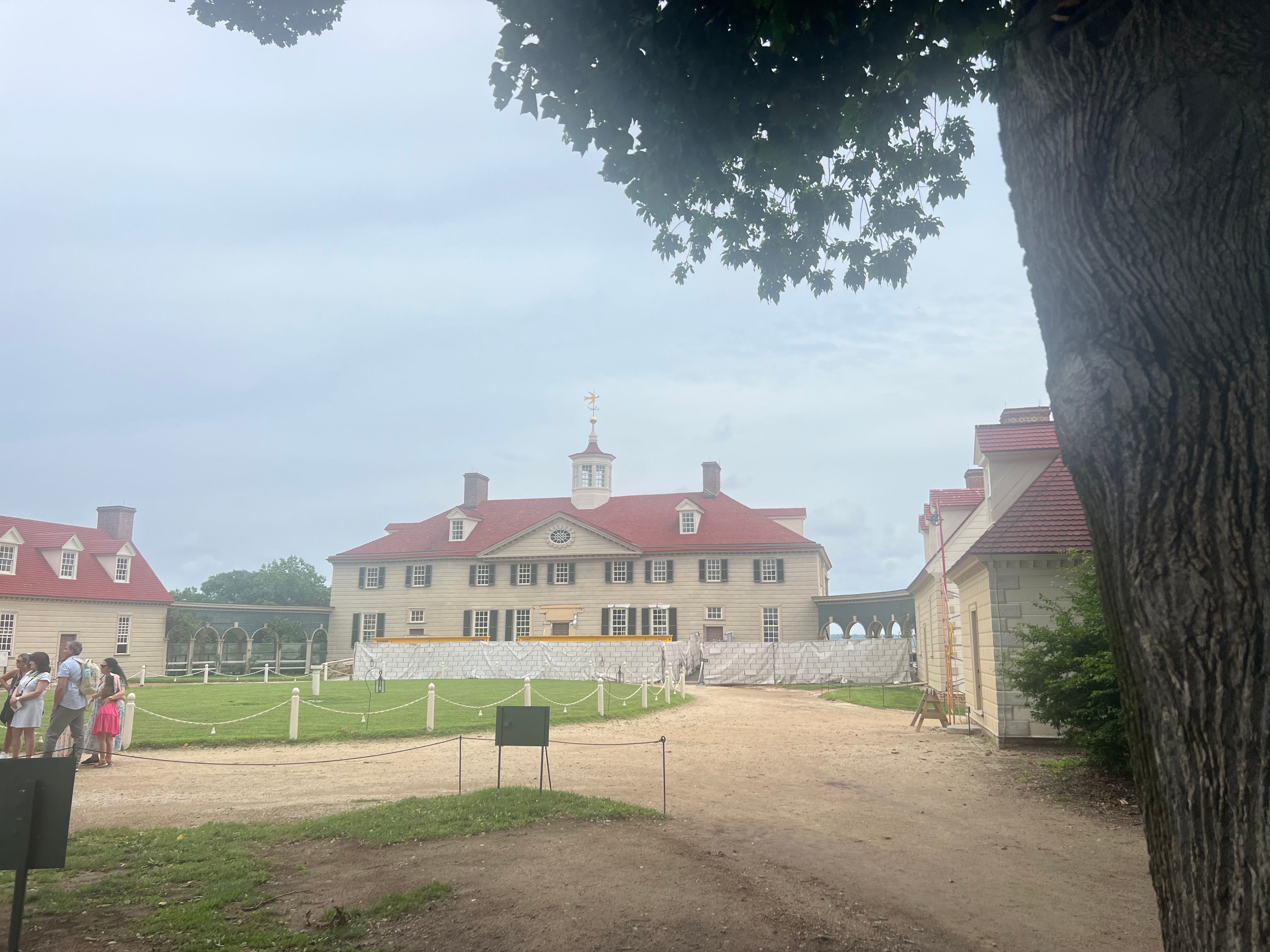
Lawrence also introduced George to Mount Vernon, the estate that would become forever associated with Washington’s name. As I reflected upon Lawrence’s influence, another thought quietly settled into my heart. Lawrence never witnessed Yorktown. He never saw his younger brother unanimously elected President. He never lived to hear George Washington called the “Father of His Country.” Yet how much of Washington’s future was quietly shaped by a brother who never lived to enjoy the harvest?
That realization has stayed with me.
Perhaps some of the greatest contributions ever made are offered by people who never witness their full impact.
Parents faithfully raising children.
Teachers patiently encouraging students.
Pastors faithfully shepherding congregations.
Mentors investing in younger generations.
Friends speaking wisdom during difficult seasons.
History may never remember their names. Heaven surely does.
Their labor is not diminished because they never see the final chapter. Lawrence reminds us that faithful investment is never wasted. Sometimes we plant trees beneath whose shade we will never sit. Yet someone will.
Learning Faithfulness Before Leadership
As a teenager, George Washington began working as a surveyor. It was demanding work. Weeks spent traveling through Virginia’s wilderness. Long miles on horseback. Harsh weather. Unforgiving terrain. Little comfort. No applause. Surveying required precision. Patience. Observation. Sound judgment. Self-discipline. It demanded careful measurements because even small errors carried significant consequences.
Long before Washington learned to command soldiers, he learned to govern himself.
That truth has become increasingly meaningful to me. Our culture often encourages us to seek influence as quickly as possible. God often encourages us to embrace faithfulness first. Leadership built without character rarely endures. Character patiently cultivated through ordinary responsibilities often becomes the foundation upon which lasting leadership is built. Washington could not have known that the forests he surveyed would later become strategically important during war. He simply completed the assignment before him. Faithfully and courageously.
Perhaps that is one of the simplest, yet most profound, lessons his early life still teaches us. We do not need to know the significance of today’s assignment to perform it faithfully. We need only trust the One who entrusted it to us. The future belongs to God. Faithfulness belongs to us.
The Classroom of Adversity
There are seasons in every life when it seems as though God is taking more than He is giving. George Washington experienced those seasons. Like all of us, he discovered that some of life’s greatest teachers arrive disguised as disappointment. In 1751, at the age of nineteen, Washington accompanied Lawrence to Barbados. The hope was simple: that the island’s warmer climate might restore Lawrence’s failing health.
Instead, George contracted smallpox. The disease nearly claimed his life. For weeks he battled fever, weakness, and uncertainty before finally recovering. The illness left permanent scars on his face, gentle reminders that he had survived something many others did not. At the time, I cannot imagine that George Washington saw anything meaningful in his suffering. He was simply a young man trying to recover.
Years later, however, history would reveal something remarkable. Having survived smallpox, Washington gained immunity to one of the eighteenth century’s deadliest diseases. During the Revolutionary War, when epidemics threatened the Continental Army almost as much as British muskets, Washington remained able to lead.
What once appeared to be a painful interruption quietly became part of God’s preparation.
How often does that happen in our own lives?
We pray for understanding while God is building endurance.
We pray for explanations while He is shaping wisdom.
We pray for the destination while He is faithfully preparing us for the journey.
Perhaps one of the greatest acts of faith is trusting that God is accomplishing something meaningful even when we cannot yet recognize it.
Another Goodbye
The joy of surviving Barbados was soon overshadowed by another loss. On July 26, 1752, Lawrence Washington died after a long struggle with tuberculosis. George was only twenty years old. The brother who had believed in him…the mentor who had opened doors for him…the steady influence who had helped shape his character…was gone.
Grief has a way of changing us. Sometimes quietly. Sometimes profoundly. History records Lawrence’s death in only a few lines, but George lived every painful day that followed missing his brother, I am confident. George Washington would come to inherit Mount Vernon. History remembers it as his home, but Washington first knew it as his stewardship. That distinction matters. Character is rarely developed through ownership alone; it is developed and solidified through holy stewardship.
Throughout Scripture, God entrusts ordinary people with ordinary responsibilities long before entrusting them with extraordinary ones.
David first cared for sheep.
Joseph first managed a prison.
Nehemiah first served as a cupbearer.
Faithfulness in smaller assignments has always been God’s pattern before greater ones. Washington was no exception. Mount Vernon was never simply an estate.It became another classroom where God continued preparing a man who had no idea the assignments still waiting beyond the horizon.
The Refining Fire
If the years at Mount Vernon taught George Washington stewardship, the years that followed would teach him something equally important.
Humility.
In 1753, at just twenty-one years of age, Washington received an assignment that few men twice his age would have welcomed. Virginia’s Lieutenant Governor, Robert Dinwiddie, had the young major to carry a diplomatic message through the dangerous Ohio Country demanding that French forces withdraw from territory claimed by Great Britain. The journey covered hundreds of miles through dense wilderness. Washington was confident in his abilities and defended them. He earned that mission.
Frozen rivers.
Mountain passes.
Uncertain weather.
Diplomatic meetings with Native American leaders.
Conversations with French officers whose response could determine whether peace or war would follow, and Washington accepted the assignment, and not because he believed history would remember it, but because it was simply the assignment before him, and he knew of the value and importance of surveying the land. He was extremely well-educated, but he was self-educated. He was supremely fluent in many subjects such as mathematics and navigation, and he had great endurance and self-discipline.
Faithfulness rarely announces its future importance. It simply asks us to obey today. Washington completed the mission and returned with detailed observations that impressed Virginia’s leadership.
He demonstrated courage without recklessness.
Confidence without arrogance.
Leadership without demanding recognition.
Another ordinary assignment had quietly become another step in God’s preparation.
Failure Becomes a Teacher
The following year, events escalated quickly.
In 1754, Washington found himself commanding troops during what would become the opening stages of the French and Indian War. Early successes soon gave way to one of the most humbling experiences of his young life. At Fort Necessity, surrounded and outnumbered, Washington was forced to surrender. No ambitious young officer dreams of surrendering. Yet I have become convinced that failure often teaches lessons success cannot. History may remember our victories, but character is often formed through our defeats.
Washington later reflected carefully upon those early military experiences. He learned the importance of preparation, the necessity of discipline, and the dangers of acting too quickly. He learned about the weight carried by every command decision, and those lessons would one day save lives.
Failure did not define him. It instructed him.
That truth has encouraged me more than once. How many of us have viewed our greatest disappointments as evidence that God abandoned His plans? What if those disappointments were actually classrooms? What if God was preparing us through experiences we would never have chosen for ourselves? Perhaps failure is not always the opposite of success. Sometimes it is part of God’s pathway toward it.
Courage Under Fire
One year later, in 1755, Washington served as a volunteer aide to British General Edward Braddock during an expedition to capture Fort Duquesne. The British Army marched with confidence; their discipline was impressive. Their uniforms immaculate. Their expectations high. Then everything changed.
Hidden French and Native American forces launched a devastating attack. Confusion swept through the British ranks. General Braddock was mortally wounded. Soldiers fled.
What had begun as a confident march became a desperate struggle for survival. Amid the chaos, twenty-three-year-old George Washington displayed remarkable courage. He rode repeatedly through intense gunfire carrying orders, rallying frightened troops, and helping organize a retreat that prevented even greater disaster. Two horses were shot from beneath him. Several bullets pierced his coat. Yet somehow, he escaped without injury. Those who witnessed the battle considered his survival extraordinary.
Washington himself never boasted about it.
Instead, he seemed to carry away something far more valuable than a dramatic story. He carried away humility. He had now witnessed both success and failure. He had witnessed confidence and disaster. He had witnessed competent leadership and costly mistakes. He experienced the good, the bad, and everything in between.
God was educating him in ways no military academy ever could.
Years later, when inexperienced officers looked to General Washington for wisdom, they were not following a man who had never failed. They were following a man who had learned from failure and who was leading from lessons learned from that failure.
There is a profound difference.
The Quiet Years at Mount Vernon
When Washington resigned his Virginia commission in 1758, he returned to Mount Vernon believing that chapter of his life had closed. The following year he married Martha Dandridge Custis, a young widow whose intelligence, strength, and partnership would become one of the great blessings of his life.
Together they built a home. They managed a growing estate. Washington became a husband. A stepfather. A farmer. A businessman. A respected member of Virginia’s House of Burgesses. To many, it appeared that his future had been settled.
He was successful.
Respected.
Financially secure.
Comfortable.
Few could have imagined that this Virginia planter would someday command an army or become the first President of a new nation. History was changing. More importantly, George Washington was changing.
Not publicly. Internally.
Yet it would eventually alter the course of the world. Sometimes the greatest changes are not the ones others see. They are the ones taking place within our own hearts.
When Conviction Deepens
One of the most remarkable aspects of George Washington’s life is not that he led the American Revolution. It is that he once proudly wore the uniform of the very nation he would later oppose. That truth has caused me to pause more than once. How does a man who faithfully served the British Crown become the man who would eventually command an army seeking independence from it?
The answer is far more profound than politics. It is found in the quiet formation of conscience. History often reduces the American Revolution to taxes, legislation, and military conflict. Those events certainly mattered. Yet for Washington, the struggle became deeply personal long before the first shots were fired. For nearly twenty years he had lived as a loyal British subject. He admired British military discipline. He respected lawful authority. He had friends who remained loyal to the Crown. His admiration for Britain was genuine. That is precisely what makes his transformation so remarkable.
Washington did not abandon Britain because loyalty had become inconvenient. He reluctantly reached the conclusion that his highest loyalty belonged somewhere else. There is an important difference between changing allegiance out of convenience and allowing one’s understanding of truth to mature through conviction.
The first follows comfort.
The second follows conscience.
That distinction matters.
As I reflected on Washington’s journey, I found myself wondering how many times throughout history ordinary men and women have faced similar crossroads, not just on battlefields, but within their own hearts.
Moments when remaining comfortable required compromising conviction.
Moments when truth demanded humility.
Moments when doing what was right became personally costly.
Those moments rarely make history books.
Yet they often become the defining moments of a life.
Perhaps that is one reason Washington’s story continues speaking across the centuries. His convictions matured before his circumstances changed. Long before he accepted command of the Continental Army, the quieter battle had already been taking place within his own conscience.
His character had been forming…
one faithful day at a time…
in the moments between.
Choosing Principle Over Preference
As political tensions slowly increased throughout the colonies, Washington continued devoting himself to the ordinary responsibilities of life. He served in Virginia’s House of Burgesses. He managed Mount Vernon. He worked to improve agriculture. He corresponded with fellow Virginians who shared growing concerns about the direction of British policy. He remained, by every outward appearance, a loyal British subject.
That detail matters.
History sometimes tells the American story as though independence became inevitable.
It was not.
For many years, Washington hoped reconciliation remained possible. He believed differences could be resolved. He believed rights could be restored. He believed the relationship between Britain and her colonies might yet be repaired.
Principled people rarely seek conflict.
They seek peace whenever peace can be preserved without sacrificing truth. Washington’s patience revealed maturity. His restraint revealed wisdom. His eventual decision revealed conviction.
Only after years of petitions ignored, rights diminished, and trust broken, did he reluctantly conclude that the liberties he believed were inherent to free people could no longer be adequately protected under British rule.
Notice what changed.
His character did not change.
His understanding did.
There is a profound difference.
Washington’s courage had not suddenly appeared. It had been developing for decades. His loyalty had not disappeared. It had simply found its highest priority. I cannot help but wonder how many of us will someday stand at similar crossroads. How many of us already have? Perhaps not between nations, but between comfort and conviction. Between acceptance and truth. Between what is familiar and comfortable to us and what is right.
Those decisions rarely announce themselves as history. They simply arrive disguised as ordinary choices. Yet they often become the defining moments of our lives.
The Hardest Battle
The more I reflected upon Washington’s life, the more convinced I became that his greatest battle was not fought at Trenton. Nor at Princeton. Nor at Yorktown. It was fought within his own heart.
Imagine serving one nation faithfully for nearly twenty years. Learning from its leaders. Wearing its uniform. Believing in its institutions. Then slowly realizing that remaining faithful to your deepest convictions now requires walking a different path. That is not political convenience. That is moral courage.
Washington did not become a different man. He became a clearer one. His highest allegiance was no longer defined by a king. It was defined by enduring principles.
Justice.
Liberty.
Duty.
Responsibility.
The God-given dignity of every human being.
The right of a free people to govern themselves under law.
Those convictions cost him dearly.
They separated him from longtime friends. They placed his reputation at risk. They exposed him to the possibility of failure, imprisonment, and death. Had the Revolution failed, history would almost certainly have remembered George Washington very differently. He understood that. Yet he moved forward anyway. Faithfulness has never required certainty. It only requires obedience.
A Lesson Hidden Within His Transformation
There is another lesson quietly woven throughout Washington’s life that I believe speaks with remarkable clarity today.
Our highest loyalty should never rest in personalities. Nor political parties. Nor institutions. Nor governments.
Those things matter to an extent.
They deserve our thoughtful participation, accountability, and our faithful stewardship, but they are not ultimate.
Institutions rise and fall. Governments change. Political movements come and go. Empires eventually disappear. Even alliances shift with time.
Truth does not.
Justice does not.
Integrity does not.
Faithfulness does not.
Those enduring principles remain worthy of our highest allegiance because they are rooted in something far greater than human power.
This is not a call to love our country less. It is a call to love Truth more. In fact, genuine and Biblical patriotism depends upon it. Washington understood that loving America required something deeper than celebrating her successes. It required protecting the principles upon which she had been founded. That distinction may be one of the greatest gifts his life still offers us today.
True patriotism is not blind loyalty. It is faithful stewardship. It is loving our nation enough to preserve the principles that make liberty possible.
An Assignment He Never Sought
By the spring of 1775, events had reached a point from which there would be no easy return. Shots had been fired at Lexington and Concord. The Second Continental Congress assembled in Philadelphia. Delegates understood that if the colonies were to survive, they would need someone capable of leading an army that scarcely existed. Washington did not campaign for the position. He did not seek applause. In fact, he privately expressed doubts about his own abilities.
Yet on June 15, 1775, the Continental Congress unanimously appointed George Washington Commander-in-Chief of the Continental Army. When I picture that moment, I do not imagine triumph.
I imagine a heavy weight.
Responsibility.
Humility.
Perhaps even fear.
Because Washington understood something many leaders forget. Leadership is not first an honor. It is a burden. It is the willingness to carry responsibility for the welfare of others. Accepting command meant leaving Mount Vernon.
Leaving Martha. Leaving the quiet life he loved. He did not know if he would ever return. Nor did he know whether history would remember him as a patriot or condemn him as a traitor.
He simply accepted the assignment God had placed before him. One faithful step. One difficult decision. One ordinary day at a time. He could not see Yorktown. He could not see the presidency. He could not see the monuments. He could only see the next act of obedience.
Perhaps that is all God has ever asked of any of us. Not to see the entire journey. Only to faithfully take the next step.
The harvest would come later, but for now, there was simply another ordinary day to steward.
Another moment between.
The Long Road Between Hope and Harvest
On June 15, 1775, George Washington accepted command of an army unlike any military force he had ever known. The Continental Army was not Britain’s well-trained professional force. It was an assembly of ordinary men.
Farmers.
Blacksmiths.
Merchants.
Teachers.
Carpenters.
Laborers.
Young boys.
Older fathers.
Men from thirteen separate colonies who often disagreed with one another as much as they disagreed with the British. Many had never fired a musket in battle. Few possessed proper uniforms. Even fewer understood the military discipline required to defeat the greatest army in the world.
Washington knew exactly what lay before him, but not because he doubted the courage of his men. It was because he understood the magnitude of the task. He was not simply building an army. He was building confidence. He was building unity. He was building hope.
Leadership, I have come to believe, is often the patient work of helping ordinary people recognize the extraordinary purpose they can accomplish together. That truth has never been limited to battlefields.
It applies equally to homes.
Churches.
Schools.
Communities.
Businesses.
And nations.
People flourish when someone believes in what they can become before they can see it themselves.
Washington became that leader.
The Weight of Leadership
From the very beginning, Washington faced obstacles that seemed impossible. His soldiers desperately needed food, clothing, weapons, ammunition, medical supplies, training, and wages.
Obstacle after obstacle continued…
Congress wanted victories. The individual colonies often disagreed. Supplies arrived late—or not at all. Enlistments expired. Discouragement spread. Every sunrise seemed to introduce another problem demanding immediate attention.
Reflecting on Washington’s life, one realization continually returned to my mind.
Washington rarely enjoyed the luxury of solving one problem at a time.
He carried dozens simultaneously. I know many people like this. The weight of that is exhausting.
Leadership often appears impressive from a distance.
Up close, however? It usually looks like responsibility. It looks like making difficult decisions with incomplete information on occasion. It looks like carrying burdens few people fully understand. It looks like accepting criticism while continuing to serve. It looks like quietly absorbing disappointment without allowing discouragement to spread to those who depend upon you.
Perhaps that is why leadership should never be pursued for recognition. It should be embraced only as an opportunity to serve by people who live by the conviction that what they do is the right thing to do whether others acknowledge that or not.
A Christmas Night Miracle
By December of 1776, the American cause appeared to be slipping away. The Continental Army had suffered repeated defeats. Morale had fallen. Many soldiers planned to return home when their enlistments expired at the end of the year. Without decisive action, the Revolution itself might quietly disappear.
Washington understood what was at stake.
On Christmas evening, under the cover of darkness, he ordered approximately 2,400 soldiers to begin crossing the icy Delaware River. The weather was brutal. Sheets of ice drifted through the current. Snow mixed with sleet. The crossing took longer than expected.
Artillery pieces had to be carefully ferried across the river. Many soldiers lacked adequate shoes or warm clothing. No one knew whether the mission would succeed. No one knew whether dawn would bring victory or disaster.
History remembers Washington standing in the boat. Paintings have forever captured that image. Yet I find myself thinking about something entirely different. He had no assurance that future generations would celebrate that crossing. He simply believed it was the next faithful step. Sometimes obedience appears remarkably ordinary while we are living it, but often, only history recognizes its significance.
Hope Returns
The surprise victory at Trenton changed far more than military strategy. It restored hope. That may have been Washington’s greatest achievement that day. People can endure tremendous hardship when hope remains alive. Without hope, even small obstacles become overwhelming. Washington understood this.
His victory reminded a weary army that the struggle was not over. It reminded ordinary citizens that liberty remained worth believing in. It reminded Congress that perseverance still mattered. Hope returned.
History remembers Trenton because it was dramatic. I remember Trenton because it reminds me that God often breathes new life into circumstances that appear beyond rescue.
How many times has He done that throughout history?
How many times has He done that in our own lives?
When all visible evidence suggests defeat, and in those moments between…
God quietly whispers,
“Continue.”
The Five Years History Compresses
Yet as I reflected upon Washington’s story, one question continued returning. What happened after Trenton? We often speak of Trenton and Yorktown almost as though one naturally followed the other. It did not. Nearly five years separated those two victories.
Five years.
History compresses those years into only a few paragraphs. Washington lived every one of those days. He buried soldiers. He comforted grieving families. He encouraged discouraged officers. He answered critics. He pleaded with Congress. He searched endlessly for supplies. He made impossible decisions. He prayed. He waited. He persevered. He continued.
Those five years have become the heart of this article for me. Because that is where most of us live. Very few people spend their lives standing at Yorktown. Most of us spend them somewhere between Trenton and Yorktown.
Between hope and fulfillment.
Between promise and harvest.
Between obedience and understanding.
Between planting…
and reaping.
Those are the moments between.
Those are the seasons Galatians 6:9 was written for. Those are the days when character quietly takes root. Those are the years that determine whether conviction will survive long enough to become legacy.
History celebrates the victories, but God develops people in the years between them.
Perhaps those years are not interruptions after all. Perhaps they are where history is actually being written with the greatest of life lessons.
Valley Forge: When Faithfulness Had No Applause
If Trenton rekindled hope, then Valley Forge tested whether hope could endure.
The winter of 1777–1778 has become one of the most recognizable chapters of the American Revolution. We picture snow. Cold. Tattered uniforms. Bare feet sliced open and stained with blood. Empty stomachs. Disease. Exhaustion. Those images are true. Yet I believe something even more significant happened there.
Character deepened. Washington could not promise victory. He could not promise comfort. He could not promise his soldiers they would survive another winter.
All he could offer was his own example.
He remained.
He endured.
He refused to surrender.
There are moments when leadership is measured not by brilliant strategy but by steadfast presence. Sometimes the greatest gift a leader can offer is simply refusing to abandon those entrusted to his care.
I have often wondered how many nights Washington quietly walked among the tents. How many conversations no historian ever recorded. How many burdens he carried silently so that others might continue believing. How many prayers rose from his heart beneath the cold winter sky.
Leadership often appears noble from a distance, yet up close, it frequently is lonely.
Yet perhaps loneliness is one of God’s classrooms. For it is often there, stripped of applause and certainty, that He teaches leaders to depend less upon themselves and more upon Him.
Valley Forge was not merely a winter encampment. It became a place where perseverance took root. The Continental Army emerged stronger not because the winter had been easy, but because they had endured it together.
How many of us have looked back over the hardest seasons of our own lives and realized that they became the very places where God quietly reshaped our character? The seasons we would never choose for ourselves often become the seasons we would never trade.
An Unexpected Alliance
There is another hidden lesson within these years that has remained with me as I have studied the life of George Washington and as of recent, reflected on this poignant national anniversary.
Years earlier, George Washington had fought against French forces during the French and Indian War.
Now, French assistance would become indispensable to securing American independence. At first glance, the irony is striking. Yet the more I reflected upon it, the more I realized something profoundly beautiful. Washington’s principles had not changed. His alliances had. His values were being molded and refined even more so during his seasons of growing in wisdom and understanding.
People sometimes confuse consistency with refusing to change. History teaches something different depending on the context. True consistency is remaining faithful to enduring principles while possessing the humility to recognize that circumstances sometimes require different partnerships or paths in order to accomplish a righteous purpose. It never means compromising principles or values.
Washington did not welcome France’s assistance because he had suddenly forgotten the past, nor because he embraced everything France represented. He accepted their partnership because liberty required cooperation toward a higher purpose.
His highest loyalty remained unchanged. His loyalty rested upon enduring principles, not temporary alliances. That distinction has lingered with me.
There are moments when principled people must work alongside those with whom they have previously disagreed in order to accomplish something greater than either could accomplish alone. Yet again, it does not mean compromising your moral conscience and values.
Individuals experience it.
Families experience it.
Communities experience it.
Churches experience it.
Nations experience it.
Such cooperation is not considered compromise when truth remains the foundation.
Washington understood that. His willingness to partner with yesterday’s adversary did not reveal inconsistency. It revealed maturity. He understood that wisdom is not measured by our ability to cling to old conflicts. It is measured by our willingness to remain faithful to eternal principles while navigating changing circumstances.
Perhaps there is a lesson there for every generation.
Perhaps there are times when God calls us to lay aside lesser differences so that something far greater may be preserved, not because truth has changed, but because our understanding of how best to defend it has matured.
The Harvest at Yorktown
By the autumn of 1781, after six long years of war, the moment that had once seemed almost impossible finally arrived. American forces, joined by their French allies under General Rochambeau and supported by the French fleet commanded by Admiral de Grasse, surrounded British General Lord Cornwallis at Yorktown, Virginia. On October 19, 1781, Cornwallis surrendered. Major military operations of the Revolutionary War had effectively come to an end. History celebrates Yorktown, and rightly so.
Yet as I have reflected upon Washington’s life, I find myself thinking less about the surrender itself and more about everything that preceded it.
The harvest did not begin at Yorktown.
It had been growing for decades. It began with an eleven-year-old boy learning responsibility after the death of his father. It grew beneath the influence of an older brother who never lived to witness the harvest himself. It matured while surveying the Virginia frontier. It deepened through illness in Barbados. It strengthened through grief after Lawrence’s death. It was refined through failure at Fort Necessity. It was humbled during Braddock’s defeat. It was cultivated during quiet years of stewardship at Mount Vernon. It matured through careful reflection before conviction. It persevered through Trenton. It endured at Valley Forge.
By the time Washington stood at Yorktown, the victory had already been quietly taking root for nearly thirty years.
History often celebrates the harvest. God patiently cultivates the seed.
That realization has forever changed the way I think about my own life.
Perhaps the greatest work God is doing within us today is not what others presently see. Perhaps it is what He alone sees. Perhaps the harvests we long for are already growing beneath the surface while we faithfully continue the work He has placed before us. Perhaps today’s unseen faithfulness is preparing tomorrow’s visible fruit.
Perhaps the moments between were never empty at all but were where the harvest was quietly growing.
The Greatest Victory
History remembers George Washington because he won a war. I believe history should also remember him because he laid one down. What do I mean by that? I believe this could be an internal war Washington conquered.
There is a victory in Washington’s life that receives far less attention than Trenton or Yorktown. It may have been one of the greatest triumphs Washington had, if not his greatest. It certainly needs to be a lesson we learn and pass down to generations to come, and it needs to be a constant example of those in a representative form of government.
This particular war was not won against the British. It was won over the temptation that has undone countless leaders throughout history…
The temptation to hold onto power, pride, and to make a name unto thyself.
Throughout history, victorious generals often became kings. Successful revolutions frequently exchanged one ruler for another. The world understood the mission. The world understood conquest.
It knew very little about surrendering authority voluntarily.
George Washington changed that.
Following the Revolutionary War, he stood in a position almost unimaginable today. He possessed the confidence of the Continental Army. He enjoyed the admiration of the American people. He was respected by foreign governments. If he had desired extraordinary political power, few could have prevented him from taking it.
Instead, he did something almost unheard of.
On December 23, 1783, before the Continental Congress meeting in Annapolis, Maryland, George Washington resigned his commission as Commander in Chief of the Continental Army. He handed back his sword. He surrendered his authority. He returned home.
When I went back to that historical moment in my studies and reflections and truly considered it, I found myself lingering there longer than I expected. The victory at Yorktown had secured America’s independence. This decision secured America’s future.
The Revolution had proven that liberty could be won, but Washington’s resignation demonstrated that liberty could also be trusted. That distinction changed the world.
King George III reportedly remarked that if Washington truly surrendered power and returned to private life, “he will be the greatest man in the world.” Whether preserved exactly or through historical tradition, those words capture something remarkable.
Even America’s former enemy recognized that something extraordinary had taken place. Washington had demonstrated what history had rarely witnessed.
Power had not conquered the man. Character had.
Leadership as Stewardship
As I reflected upon Washington’s decision, I realized something that continues to challenge me. Leadership was never something Washington just possessed. It was something he stewarded. There is an important difference. Influence is something we must steward well during the seasons we have it.
Assignments change. Titles change. Opportunities change. Faithfulness should not. Washington understood that he was never the owner of his position. He was its steward. When his assignment changed, he released it.
I cannot help but wonder how differently our homes, our churches, our communities, our businesses, and perhaps even our nation might look if more of us viewed influence this way…as something to faithfully steward while God entrusts it to us, and not just something we cling to for the title or benefits.
There is tremendous freedom in that perspective.
When leadership becomes stewardship, humility naturally follows. Service replaces self-promotion. Responsibility replaces entitlement. Legacy replaces ambition. Perhaps that is one reason Washington continues to inspire generations. He never seemed consumed with becoming great. He simply sought to become faithful. History later called him The Greatest American.
Returning Home
There is another image that has quietly captured my imagination. George Washington, the Commander in Chief, returned to Mount Vernon. Not to build a throne. Not to preserve political influence. Not to expand personal power. He returned to his farm.
To fields.
To fences.
To crops.
To the ordinary rhythms of home.
I love that image.
Perhaps because it reminds me that faithful people are not sustained by applause. They are sustained by purpose.
Washington understood something our modern culture often forgets. Our worth is never found in our title. It is found in our willingness to faithfully fulfill whatever assignment God has placed before us today. Sometimes that assignment places us before crowds. Sometimes it places us in quiet fields.
Both matter. Both can glorify God. Both require faithfulness.
How different our own lives might become if we view influence the same way. Not as something to chase. Not as something to protect. But as something God entrusts to us for a season before asking us to faithfully place it back into His hands.
Perhaps our greatest accomplishments will never be measured by how tightly we held influence, but by how willingly we surrendered it when our assignment was complete.
One Final Assignment
Washington believed his public service had ended, but Providence had one more assignment waiting. In 1787, delegates gathered in Philadelphia to address the weaknesses of the Articles of Confederation. Washington reluctantly agreed to preside over what became the Constitutional Convention. His presence brought credibility, stability, and unity to a gathering that would shape the future of the young republic. Washington was trustworthy.
Two years later, in 1789, George Washington was unanimously elected the first President of the United States. I find that remarkable.
He never campaigned for the office. He never sought the position.
Duty simply kept finding him.
Perhaps that is another quiet lesson worth remembering.
Faithful people often spend less time pursuing influence, and more time becoming the kind of people whom responsibility naturally seeks. Washington understood that every decision he made would establish precedents for generations yet unborn. There was no example to follow. He was writing one.
Every act of restraint.
Every careful decision.
Every demonstration of humility.
Every willingness to place principle above preference.
All of this became part of the foundation upon which the presidency would stand.
Then, after serving two terms, despite enormous popularity and widespread calls for him to remain in office, he stepped away.
Again.
For the second time in his life, he voluntarily surrendered extraordinary power. That decision also became one of the greatest gifts he ever gave the Constitutional Republic. He reminded the world that no individual is indispensable. Only enduring principles are. The office could endure. The Constitutional Republic could endure.The man would willingly step aside. That is stewardship. That is leadership. That is greatness rightly understood.
History remembers Washington because he helped secure America’s freedom, and we have learned through his life and demonstration that the preservation of liberty depends not merely upon courageous victories but upon humble restraint.
The Revolution proved that America could win her freedom. Washington’s willingness to surrender power proved that she could keep it through means that had not been done in the history or civilizations or governments. It boiled down to a stewardship form of government driven by the higher moral law that Washington lived by.
What History Is Really Asking
As I began to wrap up all I had been writing and compiling for this essay, the facts were no longer what occupied my thoughts. The dates. The battles. The offices he held. Those things mattered, but they are not the main point. I guess this really does not even boil down to just being about George, but rather that George Washington’s life is a vehicle to show us lessons from God.
One question quietly settled into my heart. What if history is not asking us to just admire George Washington, the man? What if history is inviting us to examine ourselves?
History lessons might prove most fruitful when they spark us to ask ourselves how those history lessons impact the person we are becoming, not just see them for what they did back then.
I believe George Washington’s life invites us to ask exactly that.
Our Own Moments Between
It is easy to admire George Washington because we already know how his story ends. However, he did not know how the story would end.
When he surveyed the Virginia wilderness, he had no idea history would remember him. When he buried Lawrence, he did not know that grief was helping shape the leader America would someday need. When he crossed the Delaware, he was not trying to create an iconic painting. He was trying to preserve hope, and he was willing to lead when all seemed lost.
When he endured Valley Forge, he was not thinking about history books. He was trying to keep an army together. When he resigned his commission, he was not attempting to create a legacy. He simply believed it was the right thing to do.
He lived one ordinary day at a time, one ordinary moment at a time. And for most of his life, those were hard moments.
Just like us.
The difference is not that Washington lived an especially different kind of life. The difference is that history eventually revealed what faithful stewardship and personal responsibility had been quietly producing all along in such a vulnerable and important time in history. That realization has profoundly changed the way I think about my own life.
Perhaps God is doing far more in our ordinary days than we presently understand. I believe that He is.
Perhaps the conversations we think are forgotten…
the children we patiently teach…
the neighbor we quietly encourage…
the kindness no one notices…
the integrity we choose when compromise would be easier…
the forgiveness we extend…
the prayers we whisper…
the sacrifices we faithfully make…
are becoming part of a story whose ending we may never fully see this side of eternity.
Lawrence Washington never witnessed Yorktown. The soldiers who died at Valley Forge never celebrated victory.
Parents often never see the full impact of the values they faithfully instill.
Teachers rarely witness the lives forever changed by one encouraging word.
The Body of Christ may seldom know the generations influenced by Biblical teachings and their faithfulness.
Mentors may never recognize the extraordinary lives quietly shaped by ordinary investments.
Faithfulness does not require us to see the harvest. It simply asks us to continue planting. That has always been God’s way. He brings about the harvest.
The People History Rarely Mentions
History remembers Washington.
It remembers Jefferson.
Adams.
Franklin.
Hamilton.
The list goes on.
Yet history seldom remembers the countless people whose faithfulness made their work possible.
The mothers who prayed.
The fathers who sacrificed.
The teachers who instructed.
The faithful Church body.
The neighbors who encouraged.
The soldiers whose names appear nowhere in history books.
The wives who waited.
The children who grew up while fathers marched away.
The ordinary citizens who quietly believed liberty was worth preserving.
Without them and God’s faithfulness through generations,
there is no Washington.
That realization should profoundly affect the way we think about significance. Significance has never depended upon recognition. Significance is measured by faithfulness to do the right things in the moments between.
Many soldiers never saw peace.
Countless faithful men and women invested in a future they would never personally enjoy.
Their lives mattered no less because history forgot their names.
Most of us will never have monuments built in our honor. Most of us will never have biographies written about our lives. Most of us will simply love, serve, work, pray, forgive,
teach, encourage, and quietly invest in others until the Lord calls us home.
And truly, that has always been enough.
The Steward of the Next Generation
History has a remarkable way of convincing us that the people who changed the world lived extraordinary lives. Perhaps that is only partly true. Perhaps they simply lived ordinary lives extraordinarily well. George Washington never knew his decisions would become lessons studied nearly two and a half centuries later.
When he chose integrity over ambition, he could not see us.
When he chose perseverance over discouragement, he could not see us.
When he surrendered power, he could not see us.
Yet here we are learning from choices he simply believed were right, and it should inspire us all to think about how we view our legacy. Legacy is not built by trying to become unforgettable. It is built by faithfully stewarding today’s responsibilities with tomorrow in mind.
Who is watching us today?
We seldom realize how often people are learning from our lives.
Washington never intended to mentor twenty-first century Americans, yet he is still influencing me. Not because he sought influence, but because he faithfully stewarded it. Influence quietly multiplies through ordinary faithfulness and going above and beyond, even when you are not asked to.
Our culture often asks, “What have you accomplished?” Scripture often asks something different. “Have you been faithful?” Those are not the same questions. Accomplishment is usually measured by visibility. Faithfulness is often measured in obscurity. One receives applause. The other frequently receives silence. Heaven measures life far differently than history does.
Heaven celebrates the Sunday school teacher whose name no history book will record.
The Sheriff or deputy who quietly protects people he will never meet again or people he may never actually meet at all.
The nurse who comforts frightened families at two o’clock in the morning.
The father who consistently keeps his promises.
The mother who faithfully prays for her children year after year.
The pastor who preaches truth whether the sanctuary is full or nearly empty.
The businessman who chooses integrity when dishonesty would be more profitable.
The widow who continues serving others while carrying grief no one fully understands.
The person who quietly chooses conviction in a culture that often rewards compromise.
History may never write their biographies.
Yet eternity already has.
America’s future will never be secured by politics alone. It will be secured by ordinary citizens who quietly become healthier in character, healthier in conviction, healthier in humility, healthier in courage, healthier in truth, and healthier in their resolve to take personal responsibility and steward their influence well…one faithful decision at a time.
Healthy individuals build healthy families.
Healthy families strengthen healthy communities.
Healthy communities strengthen our states.
Healthy states strengthen the nation.
Every lasting change begins somewhere small, where we are given little to see if we can be faithful in that before we are given more.
Perhaps that is why God so often begins His greatest work in places the world overlooks.
The stable in Bethlehem.
A shepherd’s field.
A prison.
A wilderness.
A carpenter’s shop.
History remembers the public moment, and that is fine. But that is usually made up of ordinary moments we have been faithful in. In some cases, it can be the complete opposite, and we see those moments, too. But God has been working to accomplish his good and perfect will, and what an honor that men and women from all generations from across the ages have been able to be a part.
Questions Worth Asking
As America commemorates two hundred and fifty years of independence, perhaps the greatest way we can honor those who came before us is not simply by remembering what they accomplished but by examining who we are becoming.
George Washington’s life quietly invites each of us to pause, to reflect, and to ask ourselves questions that are as relevant today as they were in the eighteenth century.
Perhaps these are questions worth asking.
Am I faithfully stewarding the ordinary responsibilities God has entrusted to me today, or am I waiting for something greater before choosing faithfulness?
When conviction becomes costly, what principles govern my life?
If every title I hold disappeared tomorrow, who would I still be?
Is my highest loyalty rooted in personalities, political parties, institutions, traditions, or in enduring truth?
Do I possess the humility to recognize when I have been wrong?
Do I have the courage to change course when truth requires it?
Am I willing to work beside those with whom I have deeply disagreed if doing so advances something greater than either of us based on truth, values, and principle?
Am I building temporary success or an enduring legacy?
What values am I quietly teaching my children and my grandchildren, my students and my neighbors, simply by the way I live?
If someone were to study my life two hundred years from now, what principles would they discover?
Would they find someone who merely spoke about integrity, or someone who practiced it?
Would they discover ambition, stewardship, comfort, or courage?
Would they see that I valued popularity or conviction?
If history never remembers my name, will my life still have mattered?
Am I investing in people whose harvest I may never live to see?
What seeds am I planting today that future generations may one day reap?
When my assignment is complete, will I be willing to lay down my own sword with the same humility with which I first received it?
And perhaps the question that has remained with me throughout this journey…
What am I doing in the moments between?
One Final Reflection
George Washington’s life teaches us about stewardship, perseverance, humility, and courage. He teaches us about faithful obedience. His life became a remarkable illustration of a timeless truth. His story reminds us that God often accomplishes His greatest work long before the world notices.
The world celebrates the crossing of the Delaware. God had been preparing the man who crossed it for decades. The world celebrates Yorktown. God had been cultivating that harvest through years of unseen faithfulness. The world remembers the presidency.
God remembers the young surveyor who learned responsibility in the forests of Virginia. The grieving younger brother who lost his mentor. The officer humbled by failure. The husband faithfully tending his home. The farmer learning stewardship. The citizen wrestling with conscience. The commander refusing to quit. The leader willing to surrender power. Those were the moments that shaped the man. They are the moments that still shape us.
History remembers George Washington because he became the Father of His Country, and I will remember him most because he sought to be faithful with whatever assignment God placed before him. He was not a perfect man. He made mistakes. He experienced failure. He wrestled with difficult decisions. He also was trying to make the right decisions within a broken system he was trying to improve. Like every one of us, he was a man in need of God’s grace. Yet he continually demonstrated a willingness to learn and grow.
He was willing to humble himself, to persevere, and to place enduring principles above personal ambition. His life reminds us that greatness is seldom achieved through one dramatic act. More often, it is cultivated through thousands of quiet decisions made when no one is watching. One act of integrity. One difficult conversation. One forgiven offense. One lesson taught. One promise kept. One prayer whispered. One ordinary day lived faithfully.
Yes, institutions rise and fall. Governments change. Political parties come and go. Empires eventually pass into history. Even alliances change.
But Truth endures.
Justice endures.
Humility endures.
Faithfulness endures.
Love endures.
The rights we have to exercise our conscience and live out our faith always endures no matter what government structure is in place.
And lives built upon those enduring principles continue bearing fruit long after earthly monuments have weathered and fallen.
As we celebrate the 250th Anniversary of American Independence, may we remember that freedom has always required more than courageous soldiers or wise statesmen. It requires people of character and virtue. It requires citizens willing to govern themselves before attempting to govern others.
May we faithfully steward each moment God has entrusted us with.
“Let us not grow weary in doing good, for in due season we will reap, if we do not give up.”
— Galatians 6:9
Dedication:
For My Parents who taught me—long before I understood its significance—that character is formed through ordinary acts of faithfulness, quiet perseverance, humble service, and unwavering conviction. Thank you for teaching me that integrity is not reserved for life’s extraordinary moments but is cultivated one decision at a time. The seeds you planted continue to bear fruit, and this work is one small part of your legacy. With my deepest love and gratitude.
To a few of my most trusted and treasured friends who inspire me daily to be all God has called me to be and who believe in that calling. I am thankful to journey and trench alongside you. I look up to you and respect you all greatly. Thank you for helping keep my canoe afloat…
Lastly, to my children, Harper and Wren. You are my treasures. I pray my life will inspire you. I hope to pass the flame of Freedom and love of God’s truth down to you. His word is a lamp unto your feet and a light unto your path (Psalm 119). It is applicable in all situations. He will never fail you.
Beautiful thoughts shared for July4 250. Relevant for all of our lives♥️🇺🇸
Rebecca. Many thanks for your search into George Washington. I have been to Mt. Vernon and Valley Forge but many decades ago. I truly enjoyed your treatment of his more private life and what transpired during those times of solitude and reflection as the burden of his responsibilities of leadership came one after the other. Particularly touching is his relationship to his older brother Lawrence and the early death of his father. Grief had a work in him that is undeniable.
One thing I must enquire about since becoming aware of the presence of this face of evil in the land. In your research is there any evidence in Gen.Washington's life particularly during his political life/career extending into his Presidency, of his membership in the Freemasons? I have read accounts of the presence of this pernicious influence notably within Washington's life but in the lives of American leadership during this delicate generative time in our nations founding. Did you find any reason to see this, if true, as an early influence in the subtle beginnings of rebellion and even insurrection right at the nation's beginning? Freemasonry has infiltrated the highest levels of human government around the globe. If it had gotten a foothold so early on in this nations' origins then it remains today an evil force and is part of the moments between in the fabric of our Once Grand Republic. Your thoughts?