Ignorance with a Microphone
The Historical Amnesia Behind "Stolen Land"

You know all the sayings that essentially boil down to this: don’t open your mouth unless you know what you’re talking about—lest you confirm you are, in fact, a fool. There’s another one just as fitting: if you don’t know the truth about history, you’re doomed to repeat its mistakes. The idea that “stardom” can stand on a stage and spew idiocy is nothing new.
One of the latest examples came from musician Billie Eilish, who declared that “no one is illegal on stolen land.” I didn’t watch the awards show—truthfully, I don’t even know which one it was—but I knew enough about the circus-like aftermath to understand that yet another celebrity had seized a moment of mic time to publicly demonstrate historical ignorance, this time under the banner of protesting ICE. Like many of you, I read about what followed. What made her comment particularly ironic was the double standard. Her California home sits atop historically ancestral territory of the Tongva Tribe, indigenous to the Los Angeles Basin. That inconvenient detail didn’t go unnoticed.
Naturally, the response came swiftly, including discussions of whether her rhetoric should extend to returning her own “land.” Whether that ever materializes remains to be seen. But it does raise an important question—one worth addressing seriously rather than emotionally: what do we mean by “stolen land”? What is colonization, really? And once you move past slogans, what—if anything—can actually be done?
This debate is ancient, yet it has been dragged into modern culture wars where facts, logic, and reason often lose to repetition and emotional manipulation. When lazy ignorance is mixed with moral grandstanding, the result is not enlightenment but confusion. So let’s confront this directly. Placing the full moral burden of colonization solely on Europeans is historically ignorant and intellectually dishonest. It’s also deeply myopic. There is scarcely a place on earth that has not, at some point, experienced displacement, conquest, tribal warfare, or ethnic cleansing by one means or another. Newsflash! Human history did not begin in 1492.
Long before Europeans ever crossed the Atlantic, populations across Europe, Asia, Africa, and the Americas were expanding, contracting, intermingling, conquering, and being conquered. Whoever would have eventually “discovered” the New World as non-indigenous people, mass death would still have followed—whether by warfare, disease, or displacement. Europeans, even with their faults, had no full understanding of the significant and vast reaching consequences of introducing Old World diseases into isolated populations. Not all Europeans who came over had wicked intent. That reality matters, whether it fits a modern narrative or not.
Dig a little deeper and an uncomfortable truth emerges. Even Indigenous groups in the Americas, like all humans throughout history, migrated toward fertile land. If that land was already occupied, it usually meant conflict. If Archaeological and anthropological evidence shows that many indigenous groups occupied specific territories for relatively short periods—often fifty to one hundred years—before moving on, voluntarily or otherwise. The notion that Europeans uniquely “stole land” in isolation from the rest of human history isn’t just false; it’s reckless to repeat. Throughout history, ownership was simple: if you could defend what was yours, you kept it. If you could not, you lost it.
That reality predates civilized nations, empires, and modern political theory. It is part of fallen human nature—present since the beginning. Humans seek land to farm, to live, to grow, and yes, to conquer. This was true thousands of years ago, and it remains true today. In many parts of the world, wicked and brutal conquering still takes place for one ideolgy or another. (I do not hear the echos of many celebrity mics ringing over mass genocide in many nations.) In some places, methods have shifted and changed. For example, land and sovereignty can be lost through economic manipulation, technology, espionage, and the theft of resources rather than open warfare. I’ve gone on record about this repeatedly, because the principle hasn’t changed—only the tools have in some cases.
Conquest rarely happens by rules. And when rules do exist, people often try to work around them. I have seen in my own state men and women in leadership positions seek to break laws and enable foreign and combatant nations to plunder our posterity by sly means and by not-so-sly means. I will never agree with immoral plunder and theft, yet it still exists in the real world will always be within human nature.
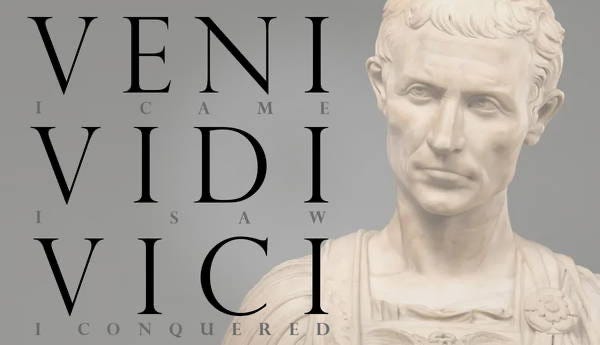
Over time, however, morality did begin to enter the discussion at a larger level. Eventually, ethical standards emerged—standards that recognized two unavoidable categories in human history and sought to figure out what to do with them: the conqueror and the conquered. Do you think Julius Caesar wrestled morally with his conquests? Of course not. Yet as centuries passed, figures like Bartolomé de las Casas—a 16th-century Spanish priest and historian—publicly criticized the mistreatment of indigenous peoples in the Americas.
Importantly, it was Western civilization itself that began insisting conquest be evaluated through the lens of human dignity and moral restraint. That conversation did not arise organically everywhere; it was pushed, argued, and fought for, which brings us to the modern hypocrisy. I am exhausted by socialist and communist-minded collectivist activists who claim that “settler colonialism,” an expression that is blanketed and means nothing really in light of all of human history with regard to human nature throughout the ages, is uniquely, holistically, and universally evil at every single turn. Contextually, it is simply not true. Nearly every civilization, empire, and nation in recorded history was established—at least in part—by settlers and colonizers. Pretending otherwise is historical fantasy. Borders shift. Populations grow. Nations rise and fall. Even Scripture confirms this reality—the first human did not simply appear without help! Genesis affirms order, purpose, and movement.
History confirms the rest. Take a modern legal example. In the 1980s, the U.S. Supreme Court ruled that the federal government had unlawfully taken land in the Black Hills, including areas around Mount Rushmore, from the Lakota Sioux. The Court awarded compensation—with interest. But the land was not returned. Why? Because millions of people now live there. Entire cities exist. Returning the land was no longer feasible. The Sioux, for their part, refused the money. But here’s where modern narratives unravel: the Sioux had themselves taken the land from the Cheyenne. Should the Sioux then pay the Cheyenne? Should the Cheyenne pay the Kiowa? Do the Kiowa owe the Crow? Should the Comanche pay the Arapaho? At what point does this end? This is where the oversimplified chant of “give the land back” collapses under its own weight. Human history is layered, complex, and messy. Reducing it to slogans doesn’t help anything—it creates chaos, especially if the context is framed from lies, deceit, and manipulation.
So what does “decolonization” actually look like? Is there a statute of limitations? Do activists believe they can trace land ownership back fifteen generations and displace millions of people today? And if so, what happens to everyone else? These are questions slogans don’t answer. For most of human history, conquest was understood as a grim but normal part of human behavior. Only in the last century has there been widespread agreement that conquest must be restrained by moral and ethical limits. That progress matters—and it should be acknowledged honestly. Yes, there are undeniable cases of immoral plunder and exploitation. Those realities should be acknowledged and frowned on.
By the same token, history is also filled with explorers and settlers who gained nothing—who lost their lives, their fortunes, and pledged their sacred honor to seek to live free and live under the higher, moral law and their Right of Conscience. Many were motivated not by greed, but by faith, purpose, and the belief that discovery and growth were God-given endeavors. Many good things come from exploration and discovery, and many bad things still happen as well, sadly.
Step back in time to consider the Aztec Empire. In just four days, tens of thousands of men, women, and children were sacrificed to pagan gods. Hearts were cut from living bodies and tossed down temple steps. Then Cortés arrived. He was not a perfect man, but his conquest ended mass human sacrifice and imposed a different moral framework. History forces an uncomfortable question: if you were conquered, which conqueror would you choose? The camp who cut your beating heart out and sacrificed you under the spell of witchcraft to their pagan gods, or the Cortes camp who desired to bring some morality and faith to the area?
History will continue to tell the story of the conquerors and the conquered until Christ returns. And when He does return, so will His justice. Jesus is the ultimate conquering King—perfectly just, perfectly righteous. One day, all things will be made right. Until then, morality and ethics matter. It’s easy to shout slogans when you’re a celebrity holding a microphone. It’s far more difficult to study history honestly, understand context, and speak with wisdom rooted in truth. No person or system is perfect—but ignorance dressed as moral superiority helps no one. I preach this to myself too.
Because I am sure this will be brought up, I do not agree that foreign, combatant nations should be allowed to weasel their way in to our nation and steal from us and plunder us, nor do I think American Citizens should enable it. We are a nation of laws for a reason, and if there are laws in the first place, they should be moral ones that are upheld by a moral people and defended to the utmost. I think we must do all things within our means to secure our posterity for ourselves and for our future generations. We should secure the borders to our national Home and Treasure and defend against all enemies foreign and domestic. Life-giving morality should be at the heart of our endeavors, as well as justice.
These are complex topics that I do not have all the answers to, but I am willing to flesh it out as I seek to pursue truth and honest communication through the lens of historical truth and Biblical morality. That is my hope for each of us.
Rebecca Chaney is the Director for Restore Liberty Mississippi and a former board Member for the Mississippi Freedom Caucus. She is a lifetime Patriot Academy Constitution Coach and has hosted Biblical Citizenship classes and Constitutional Classes since 2020. She has helped start these classes all over the state of Mississippi. She is a homeschool Mom of ten years to her son and daughter. Rebecca is employed by the Mississippi Office of Homeland Security as the statewide Targeted Violence and Terrorism and Threat Prevention Trainer and is a community liaison for the MOHS between civilians, community, and law enforcement. She holds many credentials and certifications throughout the education and behavioral arenas as well as for the Mississippi Office of Homeland Security. (The views presented in this article are those of the author and do not represent the views of the Mississippi Department of Public Safety (DPS) or the Mississippi Office of Homeland Security (MOHS).
Thank you!